

Marshall's Preservation Movement
The city’s preservation efforts aim to maintain its distinctive small-town charm while promoting sustainable growth and community pride.
The city’s preservation efforts aim to maintain its distinctive small-town charm while promoting sustainable growth and community pride. Through local initiatives, preservation advocacy, and partnerships, Marshall strives to honor its past while ensuring that future generations can experience the unique stories and character embedded in its historic sites.
In 1912, Harold C. Brooks took over his father’s business, Brooks Rupture Appliance Company and quickly amassed a fortune. The company manufactured appliances (ie. special cushions) for people, mainly men, suffering from hernias. These cushions held the ruptured muscle or tissue in place to alleviate hernia pain in the era before hernia surgeries were possible.
Brooks invested much of his money back into the town, purchasing and then donating many historic buildings and land to the city and saving much of his hometown for future generations to enjoy. He called his preservation efforts "city beautification" and included improving gardens and yards, as well as buildings. For Marshall's centennial celebration in 1930, he paid for the renovation of many key structures and gave Brooks Memorial Fountain to the city.
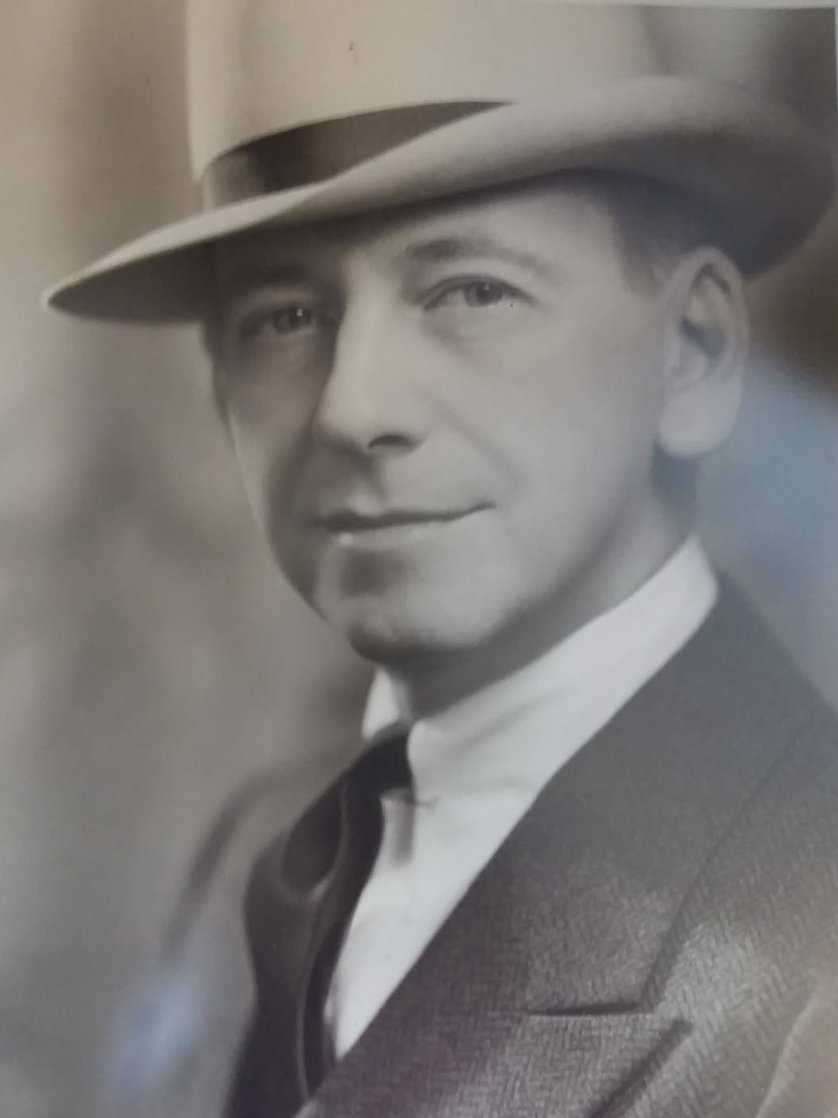
Harold Craig Brooks ~ Marshall’s Historian, Mayor and Benefactor
1879 father Charles Esselstyn Brooks married his 3rd wife, Ellen Jane Craig.
1880 Charles and Ellen had a son they named Louis Esselstyn Brooks. They also began making and selling appliances to alleviate hernia pain while Charles continued to work at a mill. Their home business grew rapidly because of the comfort and quality of their products.
1885 on June 8 Harold Craig Brooks was born in nearby Ceresco, the family moved to Marshall shortly after.
1890-1895 Harold received his only school education, at Capitol Hill School.
1892 C.E. Brooks received his license and preached his first sermon at the Methodist Church, Marshall
1900 when 15 years old, Harold earned $3 a night by playing piano at the Arbeiter Hall, on the NE corner of Green & Madison. The building was torn down in 1933 to make room for the new Post Office.
1900-1903 worked at the Voltaic Belt Company, learning advertising techniques and about the mail-order business from “Professor” Andrew Chrystal. F.A. Stuart also worked at the Voltaic Company.
1903 Harold began working at the Brooks Rupture Appliance Company at age 18.
1908 on November 17 Harold married Gladys Josephine Wright of Marshall.
1911 daughter Caroline was born, Harold was 26 years old.
1911 C.E. Brooks purchased the building where he had been renting, at 312-310 E. Michigan Ave., remodeled it in 1912, and built a rear addition in 1934.
1912 son Craig was born.
1912-13 because of the great mail-order success, the company expanded rapidly and built offices and manufacturing facilities in London and Amsterdam, as well as South America, Australia, and Asia.
1913 Charles Brooks died at age 69, leaving the business to Harold, his brother Lou, and their mother Ellen.
1920 at age 35, he was one of the original stakeholders for the Marshall Savings and Loan Bank.
1920s started collecting Marshall memorabilia/photos in anticipation of writing a book on the history of Marshall.
1921 purchased the Fitch-Gorham Greek Revival home at 310 N. Kalamazoo Avenue. The floorplans were recorded for future use and this building is on the Historic American Buildings Survey (HABS).
Shortly after buying this house, noted Danish-American landscape architect Jens Jensen designed the large garden behind it, containing a bridge and a pond, that can still be admired today. Jens left one staff member, at Brooks’ expense, in Marshall for 2 years to advise the community and its citizens on gardens and plantings. Brooks hired a tree service company from Grand Rapids, the Davy Tree Co, to annually prune and trim the city’s then prominent American Elms and he also promoted community beautification by offering prizes for the best lawn, best-kept house, and the best garden. Writers from national magazines wrote stories about the beauty of Marshall.
1922 daughter Emily was born and Brooks donated money and land to establish the Marshall Country Club and build the clubhouse.
1922 purchased Stonehall (the “twin” mansion across Kalamazoo Avenue) when he found out that someone wanted to buy it and build three homes on its “lawn”. This was the first of a dozen key structures he bought and saved in their original condition from developers over the next 30 years. He later sold Stonehall to his brother Louis, who amassed one of the states finest collections of 18th century American furniture (now housed at the Henry Ford Museum).
1923 Harold and his mother paid 90% of the cost for the new Methodist Church building, now The Franke Center for the Arts.
1923 helped establish Oaklawn Hospital in an house on Mansion Street.
1924 Charter Member of the Marshall Rotary Club and remained a member for life.
1925 to 1931 served as Mayor of Marshall.
1925 bought the old livery stable that was then a rundown taxi stand and gas station and paid 80% of the cost to convert it to into the new Marshall City Hall. The earlier “town hall” was in a room above the downtown fire station (now Marshall Hardware).
1925 Harold then bought the downtown fire station from the City to help finance its 20% portion of the costs for the new City Hall transformation. Renovations were completed in 1930.
1926 paid for a free city ice skating rink and clubhouse at 800 E. Michigan Ave. (where the VFW Hall is now), known as Brooks Athletic Field. High school football games were held there until 1935 and sometimes high school gym classes would pick up stones to help prevent injuries to the teams playing that Friday night. Harold would sometimes see cold ice skaters and send them downtown to buy warmer clothing, charging the cost to his account. The rink remained for 14 years until it moved to a W. Michigan Ave. location, it burned in 1992.
1926 applied for Sons of the American Revolution membership as a descendant of Major Richard Esselstyn.
1928 lead the campaign to finance the Wilcox-Rich Company of Battle Creek to move to Marshall, which eventually became Eaton Corporation.
1930 marking the 100-year anniversary of the City of Marshall was a huge year for Brooks, now 45 years old. He was instrumental in planning many of the festivities of the Centennial Celebration, some were long lasting:
* he returned from a trip to France and commissioned Kalamazoo architect Howard F. Young, a specialist in Greek Revival architecture, to build the Brooks Memorial Fountain in memory of his father, C.E. Brooks. The fountain is of Greek Doric design and is based on Marie Antoinette’s “Temple of Love” at Versailles. The fountain has become a symbol of Marshall.
* donated 120 acres to the City to build an airport. Governor Fred Green flew into town and was able to land in the new airport, where he was then taken downtown by horse and carriage. Brooks promoted the airport and aviation throughout his life, as can be seen on the certificate on the piano, presented posthumously in 1981.
* purchased the Hotel Albert (former Mechanics Hall) in 1929 and had it remodeled, reopening it as the Marshall Tavern in 1930 (now the Stagecoach Inn). Its balcony ensured Mayor Brooks and Governor Green had the best seats to watch the Centennial Parade. He sold the building in 1937.
* as mayor, he issued a proclamation inviting all former residents and descendants of the town pioneers to return to Marshall to celebrate, and thousands did. They came from almost every state, and Puerto Rico. Visitors reported being treated like long lost neighbors and friends and enjoyed classic Marshall hospitality.
* arranged for the Centennial parade to be filmed for prosperity.
1931 saved Carver Park from becoming the site for the new Marshall Post Office, using the location of the former Harndon Hotel instead. Since Brooks was paying for the architect and the materials, he insisted on hiring Howard F. Young and using Marshall sandstone to construct the new Post Office.
1933 on October 30, Harold's brother Louis was kidnapped by 3 men and one woman who struck him on the head, handcuffed him, and brought him to the business office. They forced him to open the safe but after they found only $4, they made him open his private safe and give them around $25,000 in bonds (worth $600,000 in 2023). The criminals were brought to justice, but this incident put Marshall on the world-wide stage for a while.
1933-39 president of the Calhoun County Historical Society. The society was formed in 1917 and survived 3 wars, the Great Depression and 10 years when no meetings were held (1923-33), during which time their artifacts were stored in an attic in the current City Hall.
1934 hired Young to design a fence as a wedding gift for his “Cottage Temple”, the house Brooks’ son Craig and his new wife Isabel lived in after their marriage. In later years, in partnership with Ed Page, Young designed and built ten houses in Marshall, all financed by Brooks to “fill the gaps” in neighborhoods. Soon after, Young tragically died from a fall on a construction site.
1936 sold the home at 1110 Verona Road (now Villa on Verona) after buying it to save the structure.
1936 came into possession of two fire bells at an auction. He was outbid by Max Stulberg but the city decided to give the bells to the “town historian”. Brooks later donated one to the city (now at City Hall) and one to the historical society (now at Capitol Hill School).
1942 registered for the WWII draft at age 56, living at 310 Kalamazoo Ave., scar on calf on right leg noted.
1940s published articles in Michigan History magazine about the Brotherhood of Locomotive Engineers and the “Founding of the Marshall Public School System”.
1950s his yard became a training area for some of the UofM Wolverine football team when his grandson, Charlie, was on the team during the Ron Kramer-Terry Barr era.
1950 donated land at 800 E. Michigan Avenue for the VFW Hall, and $5000 towards constructing the building.
1951 bought the Honolulu House to save it from being torn down and being turned into a gas station.
1952 Brooks retired from his company.
1953 lead fundraising campaign to build the (current) Oaklawn Hospital building.
1955 sold 521 N. Kalamazoo Ave. to Creighton Sherman after buying it to save it from demolition.
1955 wife Gladys passed away on August 23 at 68 years old, they had been married 46 years.
1958 brother Louis passed away on October 14 at 78 years old.
1950-60s published chapters (on Marshall schools, hotels, newspapers, churches, business district, the early days, Indians, Territorial Road, etc.) of his anticipated book in the Marshall Rotary Extra and the Marshall Chronicle newspapers. He never finished his book, but 60 years later another local author, Richard Carver, drew upon his material to publish A History of Marshall in 1993, the definitive history of the town.
1962 sold the Honolulu House to the Calhoun County Historical Society with the stipulation that the group change its name to the Marshall Historical Society.
1965-66 wrote “Marshall Hall of Fame” biographical sketches on 25 prominent historical figures for the Marshall Rotary Extra.
1972 Sometime between 1943 and 1972, Brooks bought the Marshall House to save it from destruction (building that is south of Carver Park). He sold it to Elliot Court, who then sold it to Mark Putnam in 1972 who turned it into a funeral home.
1972 saluted by the Historical Society of Michigan and received the Battle Creek Enquirer’s “George Award”.
1973 The National Trust for Historic Preservation gave him a major award and so did the Michigan Historical Society “Because of his presence and devotion, Marshall is a better place,” the MHS recognized Brooks as the organizer and developer of the historic preservation movement in Marshall.
1975 received a Nugget Trophy from the National Trust for Historic Preservation in the United States.
1978 passed away at age 93. He is buried in Oakridge Cemetery, Marshall. His life has become one to which all citizens, in all cities, should aspire to emulate.