Marshall on the Underground Railroad
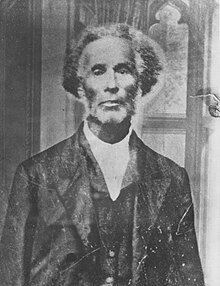
Adam Crosswhite was an escaped slave who arrived in Marshall with his family in 1844 by following the Underground Railroad.
The Underground Railroad was established before the Civil War as a route escaped slaves followed to escape to freedom into Canada. Slaves began their journeys with a great deal of bravery and little else, and they had virtually no help until they reached northern non-slave states like Michigan. Even then, the help was still sparse and hard to find, because helping escaping slaves was illegal and had severe consequences, sometimes even death. Because of this threat, secrecy was essential, so this route was kept secret, or “underground”.
At this time, the newest mode of transportation was the railroad, and everyone was talking about it, using the new terms like stations, stationmasters, conductors, and passengers. Looking for a way to communicate, but also keep the messages secret, the people involved started using these new words. So, the “railroad” was the route (it was never an actual railroad), “passengers” were escaping slaves, and “stationmasters” and “conductors” were sympathetic people along the route who helped the freedom seekers.
Due to the generosity of its citizens and a rather large black population at the time, many escaped slaves chose to remain in Calhoun County instead of continuing to Canada. They got jobs and built homes and businesses as they integrated into the community. Adam Crosswhite and his family escaped along the Underground Railroad and made their home in Marshall.
In 1846, slave catchers tried to arrest and return Adam and his family to their previous owner in Kentucky. Instead, the citizens of Marshall arrested the slave catchers and helped smuggle the Crosswhite family into Canada.
The Marshall citizens were later convicted of “depriving a man of his rightful property” in Detroit Federal Court. The citizens paid a large fine, with help from donations gathered from along the Underground Railroad. This incident, and others like it, eventually led to the passage of the Fugitive Slave Act of 1850, which guaranteed that escaped slaves had no rights, meaning they could not defend themselves in court, and that everyone (including citizens of free states like Michigan) HAD to help slave catchers obtain their "property".
In 1854, Senator Erastus Hussey from Battle Creek wrote and passed the Personal Liberty Law which stated that capturing escaped slaves was illegal within the State of Michigan, leading to conflicts between state and federal laws. This law and conflict became one of the major catalysts of the Civil War.
Adam Crosswhite returned to live in Marshall after the Civil War and he is now buried near his rescuers in Marshall’s Oakridge Cemetery.